Is a Tiny Home a Good Airbnb Investment in Australia? (2026 Guide)
Tiny homes have become one of the most in-demand Airbnb stays in Australia — especially in places like the Hunter Valley and rural wine regions. Guests want privacy, comfort, and something that feels a little different from a standard cabin, and investors want a stay that’s affordable to set up but strong on nightly rates.
As a tiny home builder, we’re asked the same question almost every week: “Is a tiny home actually a good Airbnb investment?”
The short answer? It can be. But the numbers depend on where your property is, how the home is set up, and the type of experience you want to offer.
This guide breaks down why tiny homes perform so well on short-stay platforms, how much they typically earn, what it costs to get one guest-ready, and what kind of return you can realistically expect
What Makes Tiny Homes So Popular as Airbnb Rentals?
Tiny homes consistently outperform standard accommodation on short-stay platforms because they offer something guests can’t get from a regular cabin or hotel room — a private, self-contained escape that feels intentionally designed. People aren’t just booking a place to sleep; they’re booking an experience.
Here’s why they work so well:
1. They’re Unique Stays (and Unique Stays Get Booked More)
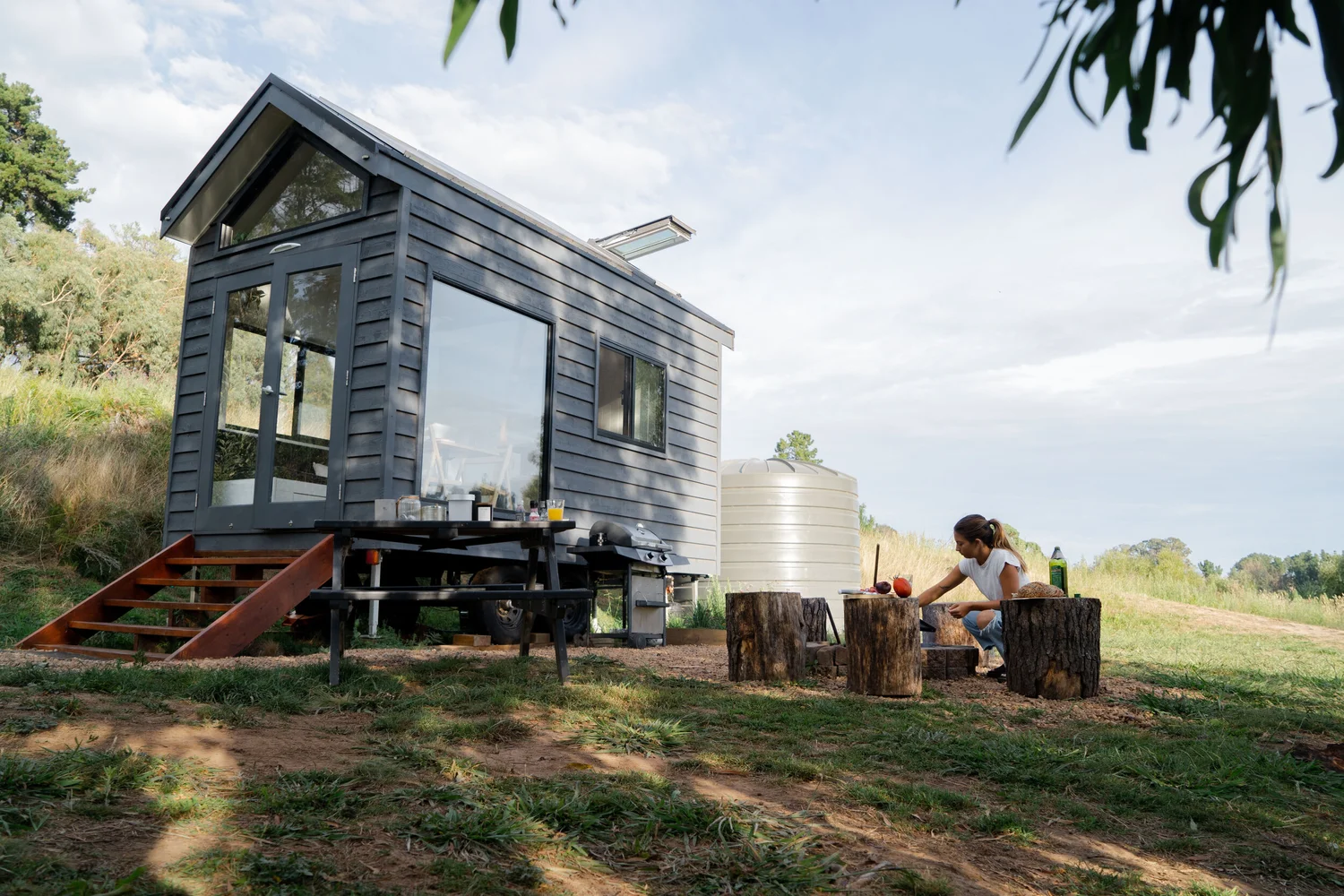
Airbnb pushes unique, design-led listings to the top of search results because guests actively seek them out. Tiny homes sit in that sweet spot: modern, compact, photogenic, and different enough to feel special without being unfamiliar.
A well-designed tiny home instantly becomes the “save for later” kind of stay — which translates into more bookings.
2. Guests Want Privacy and Space Away From Crowds
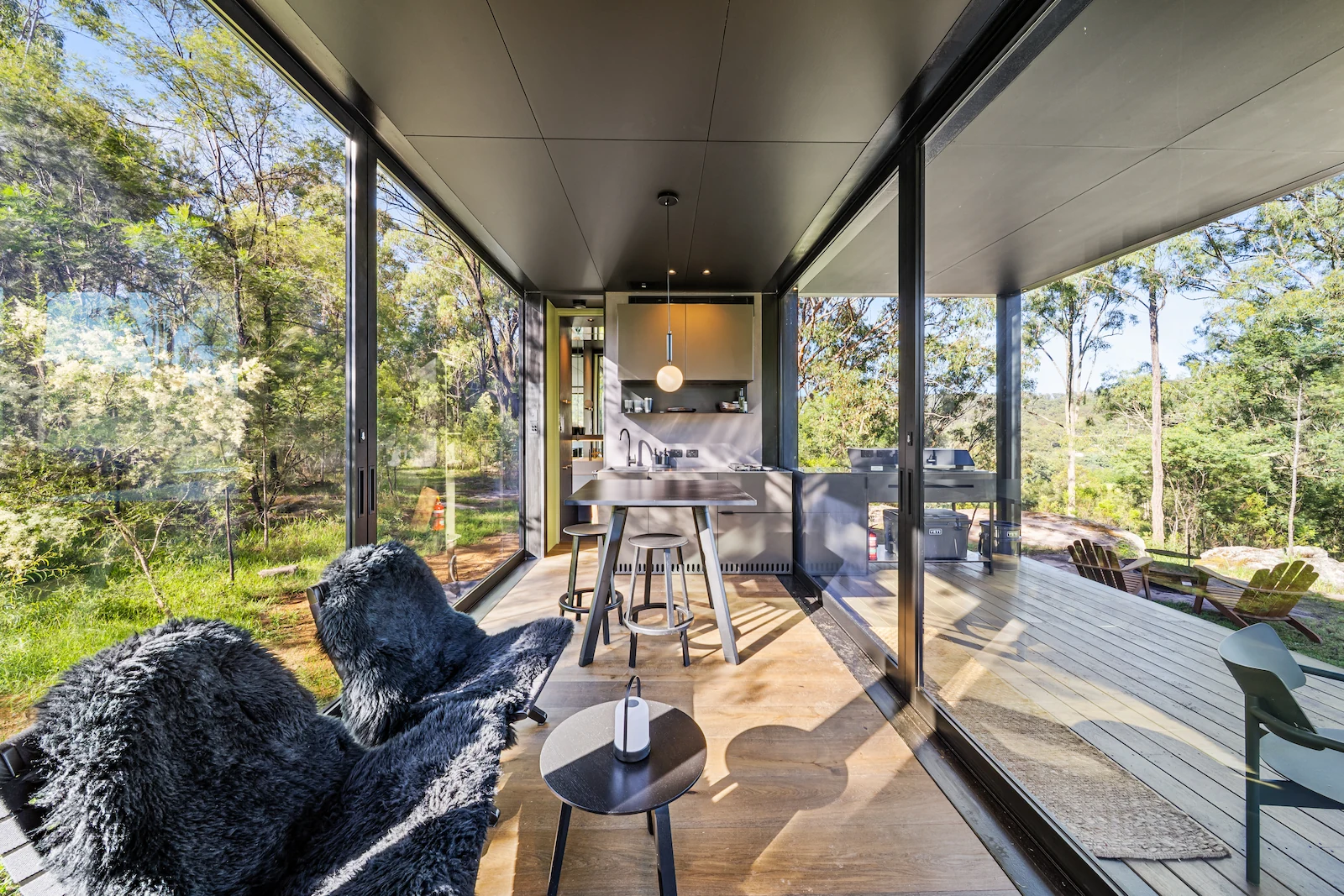
Unlike a studio or guestroom attached to a house, a tiny home stands alone. It gives guests their own space, their own deck, and their own outlook.
For couples, friends, and solo travellers, this level of privacy is a big reason they choose tiny homes over hotels.
3. They Fit Beautifully Into Rural and Scenic Locations
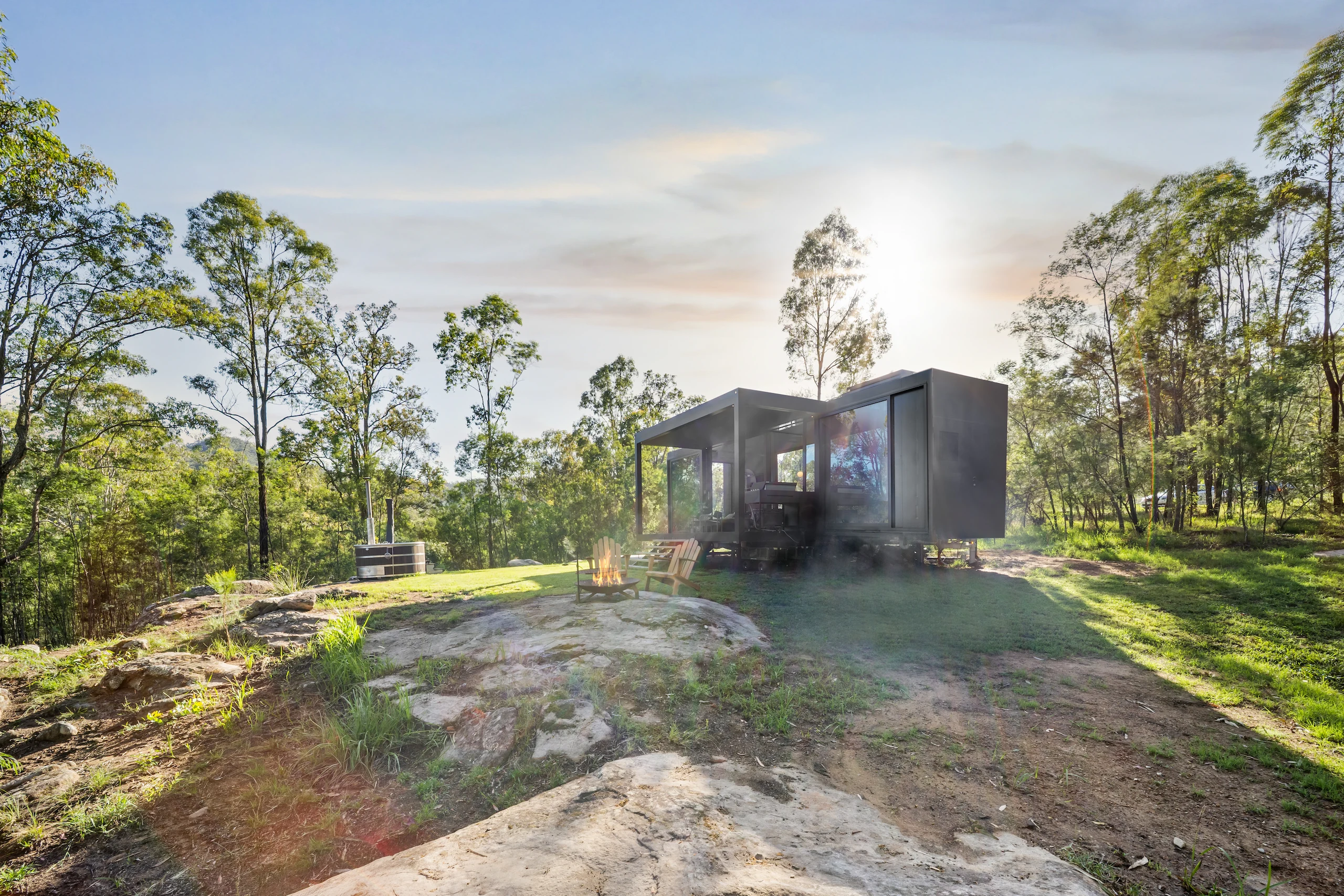
Rural regions — Hunter Valley, wine country, coastal hills, the mountains — thrive on weekend tourism. A tiny home fits naturally into these landscapes without overwhelming the property.
Guests love waking up to open views, vineyard sunsets, or quiet bushland, and tiny homes are designed to sit lightly on the land while making the most of those surroundings.
4. They Photograph Extremely Well (and Photography Sells Stays)
Airbnb is a visual marketplace. A small but well-designed space with strong architectural lines, warm materials, and good lighting often performs better than larger but less distinctive accommodation.
Investors who build a tiny home with clear visual appeal (big doors, well-framed views, simple styling) tend to see higher occupancy.
5. They Create an “Experience” Without Needing Full Resort Infrastructure
Outdoor baths, fire pits, decks, big windows, skylights — tiny homes make these features feel intentional.
Guests don’t need a full resort. They just want something thoughtful, comfortable, and a little different from their everyday life.
This combination of uniqueness, privacy, location appeal, and “experience value” is why tiny homes continue to punch above their weight in nightly rates and bookings.

What Factors Drive the Price of a Tiny Home? (Size, Materials, Site Works & More)
Every tiny home is different, and the final price simply comes down to the choices you make (the size, the layout, the finishes you like, and how you plan to use it). The good news is: you have control. You can keep things simple, or you can add features that make the home feel more like a long-term living space or a high-earning Airbnb.
Here are the main things that shape the cost:
1. Size & Layout
Tiny homes come in different lengths and floorplan styles.
More space gives you more flexibility with storage, bedrooms, and living areas, but we can also design clever layouts that feel open without making the trailer longer. It’s all about finding the right balance for how you want to live.
2. Materials & Level of Finish
This is where your tiny home really becomes yours.
Some people prefer a simple, clean fit-out to keep the budget tight. Others want higher-end Tiny Homes that use things like:
- quality windows and glazing
- proper insulation
- hardwood or premium flooring
- custom joinery
- better appliances
If you want your tiny home to feel like an actual home, not a caravan, this is where your money goes.
None of these choices are “right or wrong”, they just help shape the overall look, feel, and durability of the home.
3. Off-Grid vs On-Grid Setup
Solar, batteries, water tanks and greywater systems give you freedom and flexibility, especially on rural properties. You can add as much or as little as you need depending on your land and lifestyle.
Some clients love full off-grid. Others prefer a simple plug-in setup. You choose what suits your property and budget.
4. Site Works & Access
Every property is different. Some are flat and easy to access, others may need a simple pad or a bit of prep before delivery.
Think factors like:
- sloped or rocky land
- long driveways
- difficult crane access
- trenching for water/power
- levelling or preparing a pad
This doesn’t have to be complicated. Most of the time, we can give you clear guidance once we understand your land and where the home will sit.
5. Custom Design & Engineering
Whether you choose a ready-to-build model or want a custom layout, the cost scales with the level of personalisation.
If you already have a vision, we help shape that into something functional, comfortable, and aligned with your budget.
If you’re unsure which direction suits your land, lifestyle, or budget, we can walk you through the options and give you a clear idea of what your build would look like.
How Much Can a Tiny Home Airbnb Earn in Australia? (Real Numbers)
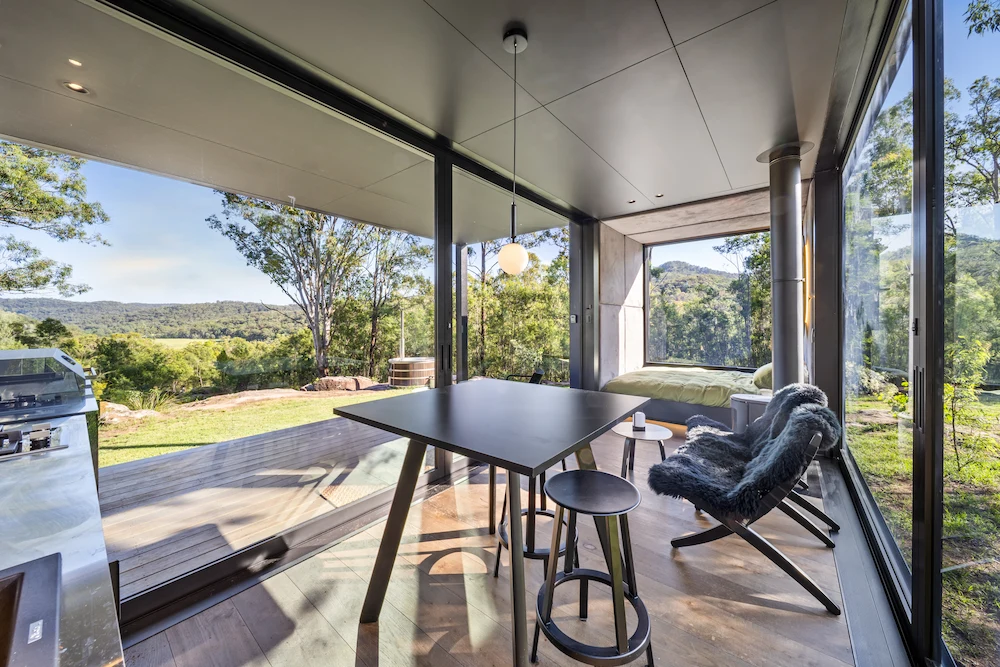
Tiny homes can generate impressive returns as short-stay rentals because guests are willing to pay a premium for privacy, design, and a unique experience. The exact numbers depend on your location, your nightly rate, and how often you’re booked, but here’s a clear idea of what’s realistic across Australia — especially in popular getaway regions like the Hunter Valley.
Nightly Rates: $200–$450+ per night
Across regional NSW, well-designed tiny homes regularly book between $200 and $450 per night, with higher rates driven by:
- proximity to wineries or tourist trails
- scenic views or rural outlooks
- outdoor baths / decks / fire pits
- high-quality interiors and photography
Tiny homes that offer a “moment” (a soaking tub, a large picture window, a cosy wood fire) reliably sit at the upper end of that range.
Occupancy Rates: 50%–70% Across Regional Stays
Occupancy fluctuates based on location and season, but rural NSW consistently performs well for short-stays. A realistic expectation is:
- Conservative: 50% occupancy
- Strong: 60–70% occupancy
Weekends typically book out far in advance, and mid-week stays create the extra margin.
Hunter Valley Snapshot
The Hunter Valley is one of NSW’s most reliable tourism markets, with year-round demand driven by:
- winery weekends
- weddings
- concerts
- short escapes from Sydney
In this region, it’s common to see:
- Nightly Rates: $250–$450+
- Occupancy: 55%–70%
- Annual Gross Revenue Range:
$45,000 – $85,000+, depending on design, location, and seasonality
Premium tiny homes with strong visual appeal, privacy, and outdoor amenities sit toward the higher end of the spectrum.
What This Means in Practice
Even a modest performer with a conservative nightly rate and mid-range occupancy can easily sit in the $35k–$50k per year range. In strong regions with higher rates and solid occupancy, it’s realistic to see $60k–$80k+ before costs.
Tiny homes don’t need high occupancy to produce meaningful returns — their low operating costs and relatively low setup cost allow margins that traditional cabins often struggle to match.
What Does It Cost to Set Up a Tiny Home Airbnb? (Setup, Site & Styling)
Setting up a tiny home as an Airbnb is usually more affordable than building a full cabin or granny flat, but there are still a few costs to factor in beyond the home itself. The total budget depends on the style of experience you want to offer — simple and cosy, or premium and design-led.
Here’s a clear breakdown of what most owners consider.
1. The Tiny Home Build
For a quality, fully finished tiny home suitable for year-round stays, most people budget $110,000–$160,000+, depending on size, layout, materials, and whether it’s custom or ready-to-build.
Tiny homes intended for Airbnb often include:
- strong indoor–outdoor flow
- smart storage
- premium finishes
- good insulation + glazing
- well-designed kitchen and bathroom layouts
Guests notice quality, and it directly influences your nightly rate.
2. Decking, Outdoor Spaces & “Experience Features”
Outdoor areas are a huge part of what makes a guest want to book your stay over someone else’s. Depending on your land and vision, this can include:
- a small deck or landing
- larger entertaining decks
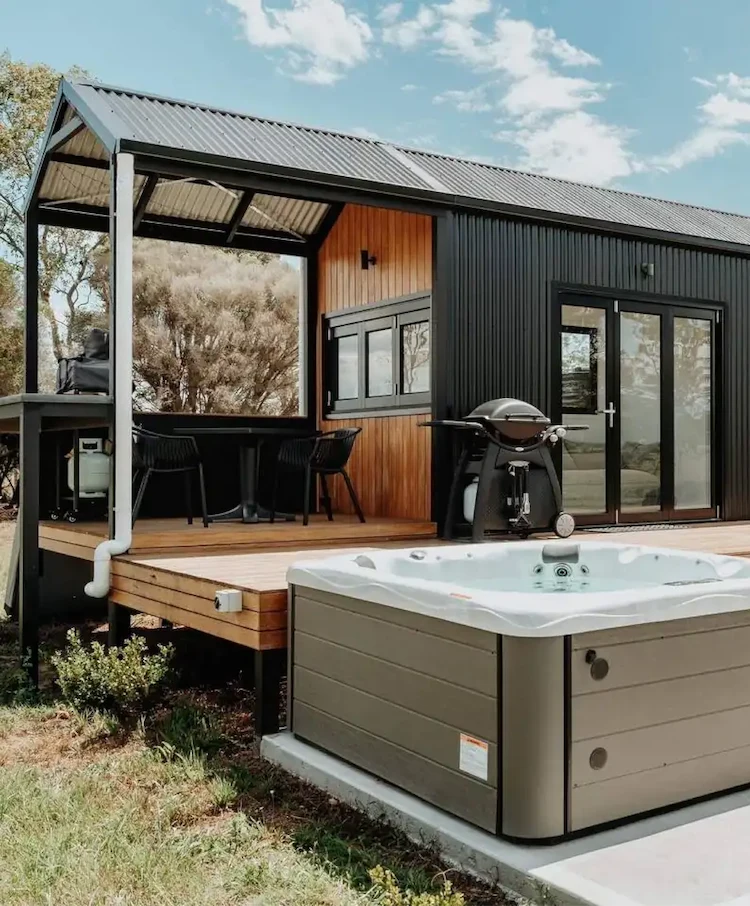
- outdoor baths or hot tubs
- fire pits
- landscaping or simple privacy screens
Investors typically allocate $5,000–$25,000+ here, depending on how “premium” they want the experience to feel.
3. Site Preparation & Delivery
Every property is different, but common setup costs include:
- creating a level pad or footing
- delivery by truck (or rarely a crane for tight access)
- simple retaining or clearing if needed
For straightforward sites, this can be relatively light.
For more complex blocks, it’s better to allow a buffer until we assess your land.
4. Utilities & Off-Grid Options
Depending on your property, you might choose:
On-grid:
- water connection
- Power
- Greywater
- basic plumbing
Off-grid:
- solar + battery systems
- water tanks
- composting system
- greywater solutions
These systems add cost upfront but reduce ongoing bills, and they allow you to place the home on more remote land.
5. Furnishing & Styling
Tiny homes don’t need much furniture, but they do need the right furniture:
- quality bedding
- Lighting
- kitchen essentials
- small furniture pieces
- textiles and décor items
Most owners set aside $3,000–$10,000 to make the space feel inviting and photograph well — which directly affects bookings.
6. The “Total Setup Picture”
Most Airbnb-ready tiny home projects end up in the broad range of:
👉 $130,000 – $190,000+ all-in, depending on:
- the home you choose
- the outdoor experience you want to offer
- the needs of your land
- whether you go on-grid or off-grid
Once everything is set up, the ongoing costs are relatively low compared to traditional accommodation.
If you want a clearer estimate tailored to your property, we can walk you through the setup and give you an accurate breakdown. Get in touch here.

In summary
A tiny home can be a strong Airbnb investment when it’s placed in the right location and set up with an experience in mind. With solid nightly rates, steady occupancy in popular regions, and a lower startup cost than a traditional cabin or second dwelling, many owners find the numbers stack up quickly. The real value comes from pairing thoughtful design with a setting that guests want to escape to — that’s where tiny homes consistently outperform expectations.
If you’re exploring whether a tiny home would work on your property, we can help you run the numbers and shape a setup that matches your land, your goals, and the experience you want guests to have.